You want to launch a guided tour, a cooking class, or any other tourist activity? Make sure you don't skip the critical pricing step. An activity priced just right will fly off the shelves, whereas an overpriced one, however great it is, simply won't sell. Here are our tips for setting the right price for your offerings and, in doing so, maximizing your sales.
Set your floor price
The most common mistake when pricing a service or a tourist activity is trying to offer the lowest possible price, sometimes to the point of forgetting certain costs, such as transport or equipment. The first thing to do is therefore to define your floor price.The floor price is the minimum price at which you break even and don't lose money. You need to draw up a clear list of all costs associated with your activity: travel expenses, required equipment, taxes… If you accompany clients to a paid venue as part of a guided tour, you will also need to include the cost of admission in your pricing.
Don't forget to factor in the year-round costs of running your activity, including insurance and the time you spend on organization and preparation. All of that has a cost and must be taken into account.
This step is obviously crucial for everything that follows! A correctly established floor price is the guarantee of the long-term viability of your activity. Conversely, if you've cut it too fine and overlooked certain expenses, you'll end up working at a loss, which is clearly unsustainable.
Don't forget taxes! If you are liable for VAT, you will need to define a floor price excluding tax and add VAT to arrive at your public price.
Factor in platform commissions
If you intend to sell your tours, activities or workshops on platforms such as GetYourGuide or Viator, you absolutely must take their commissions into account when setting your prices.A site like GetYourGuide charges a commission of 30% on every sale. You therefore need to factor this in to cover it fully or partially, depending on your strategy. In any case, don't make the mistake of listing on GetYourGuide or Viator at your floor price: the 30% commission will automatically put you in the red on every sale.
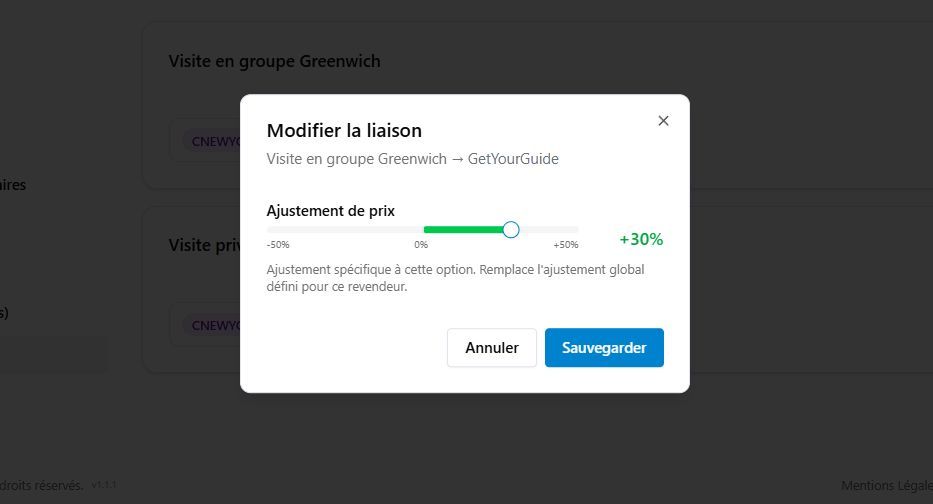
A handy tip: using the Explorates booking system lets you automatically factor resale platform commissions into your prices. By setting the GetYourGuide commission to 30% in Explorates, all the activities and products you list on GetYourGuide will automatically be marked up by 30%. A simple, practical feature that guarantees you won't lose money!
You can also adjust the mark-up as much as you like. You can therefore reduce it during quiet periods to offer a more competitive price on GetYourGuide, and increase it in high season if you only need GetYourGuide to top up your bookings.
Compare your offering with your competitors
Before putting your activity on sale, survey your competitors and note everyone's prices. This will give you an excellent picture of the market. Take a 2-hour guided tour as an example: if all your competitors charge between €30 and €40, you'll have no chance positioning yourself at €60 for an equivalent experience. Equally, there's no point undercutting the market with a tour at €15, which would likely be unprofitable for you anyway.Price also has a psychological dimension. If all your competitors offer the same guided tour at €45 and you arrive with one at €9, customers will doubt the quality of your offering. Your price must be credible.
You therefore need to study the market and compare like for like, i.e. the same duration, the same route or activity, and the same language. Look at what is included in the prices and whether there are any compulsory supplements. In the case of an art workshop, is the materials included or does everyone need to bring their own brushes and paints?
Researching the competition is an essential step before setting your price. Don't hesitate to repeat the exercise regularly, including during the season, to check that you are still competitive in the market. Goal: stay competitive!
Bear in mind that customers also compare offerings before they buy! Be ready with a clear, well-reasoned answer if a prospect asks you why your tour or workshop is €10 more expensive than a particular competitor.
Define the right pricing structure
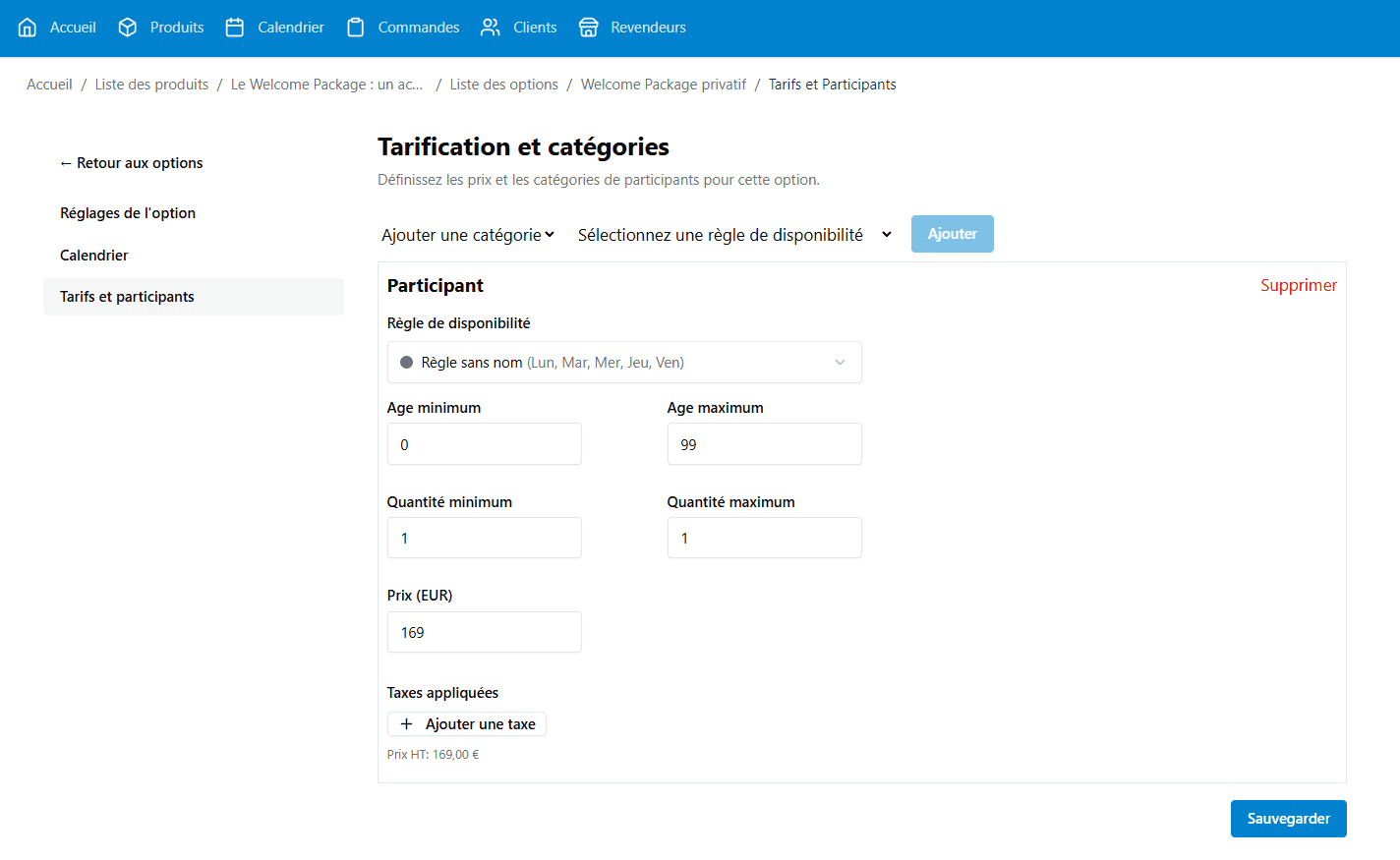
Have you set your floor price? Have you factored in activity platform commissions? Are you in line with the competition? You're not quite done yet! You now need to define your pricing structure, based on audience and age groups.You need to set a price for adults and a price for children. For guided tours, the practice observed almost everywhere in the world is to offer a reduced price for children and even free entry for the very young, up to age 3 or even 5. In other cases, such as an airport transfer or a helicopter tour, adult and child prices are the same because a child occupies an adult seat.
You can also put in place a special rate for groups wishing to book your experience as a private session. This price is then a flat fee, regardless of the number of participants. You will obviously need to cap your private rate by specifying the maximum number of people it covers.
A private rate is in any case an excellent way to tap into the corporate market, team events, or the premium segment. You can also plan additional services for private clients, for example charging for a hotel pick-up or adding a souvenir photo package or a printed booklet.
Adopt a dynamic pricing policy
Airlines were the first to embrace yield management and dynamic pricing. The principle: adjust prices according to current and projected occupancy. An airline will naturally raise its prices for Friday evening and Sunday evening flights, for instance, while Saturday morning flights will be more affordable.Yield management and dynamic pricing have spread widely throughout the travel industry, from hotels to tickets for major tourist attractions. And you too can adopt this approach for your guided tours, creative workshops, or any other tourist offering.
This means using a booking system that allows you to schedule your rates for the coming season. Explorates does exactly that, enabling you to define pricing in a completely unlimited way. Your Saturday guided tour or workshop can therefore be priced higher than your Tuesday morning session, when everyone is at work.
Using dynamic pricing will allow you to optimize both your margins and your occupancy rates. Conversely, you can of course decide to roll out a special rate for a particular date that isn't filling up as expected.
Whatever happens, be pragmatic about your pricing. If a price isn't working, don't persist: go back to your calculations and try something different. Equally, if sales are coming in far too easily, your price may be too low… Pricing is everything!