What is a Double Booking?
If the term "double booking" — also known as a duplicate reservation — rings a bell, you can probably think of several examples from your own business. The tourism and leisure industry relies on booking systems that are not always digital or connected to one another.As a result, the same museum ticket or the same spot on a guided tour or workshop can end up being sold to two different customers, or even more.This becomes particularly problematic for activities that have a limited number of participants or limited resources.Take the example of a cookery class capped at 12 participants: if 2 extra spots have been booked, your group suddenly becomes 14, and you may not have the space or supplies to cope.
But how does a double booking happen? It occurs when booking systems are not connected to each other and availability is not updated in real time.Customer A might, for example, book 4 spots on your website, but if your availability is not synced in real time with an activity platform such asViator orGet Your Guide, those 4 spots will still appear as available. Customer B can then book the same 4 spots — and just like that, you have 4 too many bookings!
The more platforms you sell your tours and activities on, the greater the risk of double bookings. You end up chasing every platform to keep calendars and availability in sync. Managing that risk will drain your energy and eat up huge amounts of time.
What are the consequences of double bookings?
Double bookings inevitably shatter the rules you set for your tours and activities — whether that's a guided tour, a creative workshop, or anything else.You will find yourself with larger groups than expected, which creates logistical headaches as well as a poorer experience for your customers.If you promise your customers a group size of no more than 12, they will not be happy to find themselves in a noticeably larger group. Some will not hesitate to leave negative reviews on review platforms such as TripAdvisor or your Google Maps listing.A double booking can cost you your reputation — over something as straightforward as organisation.
If you spot the double booking before the activity date and manage to contact customers in time, the situation is hardly better. Customers will struggle to understand why you are cancelling a booking they made without any issue. The result: frustration, and an unpleasant feeling of having wasted their time dealing with a disorganised — or even dishonest — operator.
The consequences can be even harder to manage if you offer several tours on the same day at the same time.Without a unified booking system, you risk having customers booked onto two different tours when your intention was to offer a wide choice of dates and time slots, closing duplicate slots as bookings came in.That strategy is a smart way to optimise sales, but it carries a very high risk of double bookings.
In the end, double bookings will cost you both money and time. You will have to cancel duplicates, explain what happened, issue refunds, and raise credit notes for your accounts. If you work with other guides, the knock-on effects become even more time-consuming and draining.The tourism and leisure industry is unpredictable enough without creating extra obstacles for yourself!
Managing bookings manually in a calendar is the number-one cause of errors and duplicates — especially when that calendar is shared among several people responsible for updating it as bookings come in.
How do you prevent duplicate bookings?
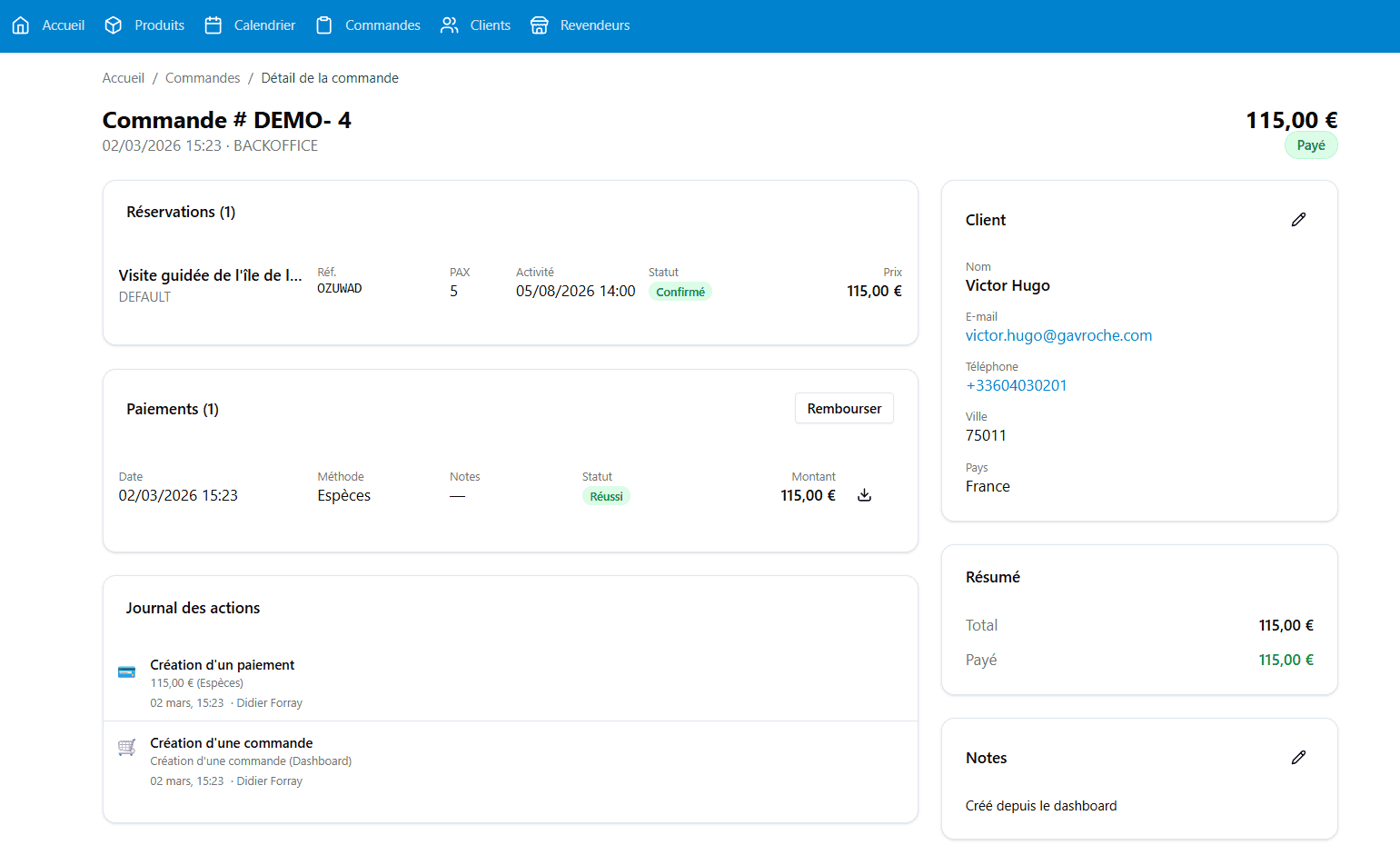
If you are reading this, you are just a few clicks away from the solution!OurExplorates booking systemlets you manage all your bookings in one place — stress-free and error-free.You keep your own website, and you continue listing your products on Viator and Get Your Guide, but all the technical management of availability, pricing and reservations is centralised through Explorates.In practice, it works very simply: when Customer A buys 4 spots on your website, those 4 spots are removed from sale on Viator and Get Your Guide within seconds. Conversely, if Customer A cancels all 4 spots — or just 2 of the 4 — the cancelled spots become available again on Viator and Get Your Guide immediately. No more risk of duplicates.
How does it work? Explorates is connected to your website, Viator and Get Your Guide, and whenever a booking is made on any one of them, it is automatically reflected across the others.To achieve this, Explorates works in close partnership with Viator and Get Your Guide, who give us access to their API. In technical terms, Explorates acts as aChannel Manager, managing all your sales channels from a single hub.
Contact ustoday to request a demo and see exactly how the system works.We can also offer you a trial period to get comfortable with our platform. Say goodbye to double bookings!